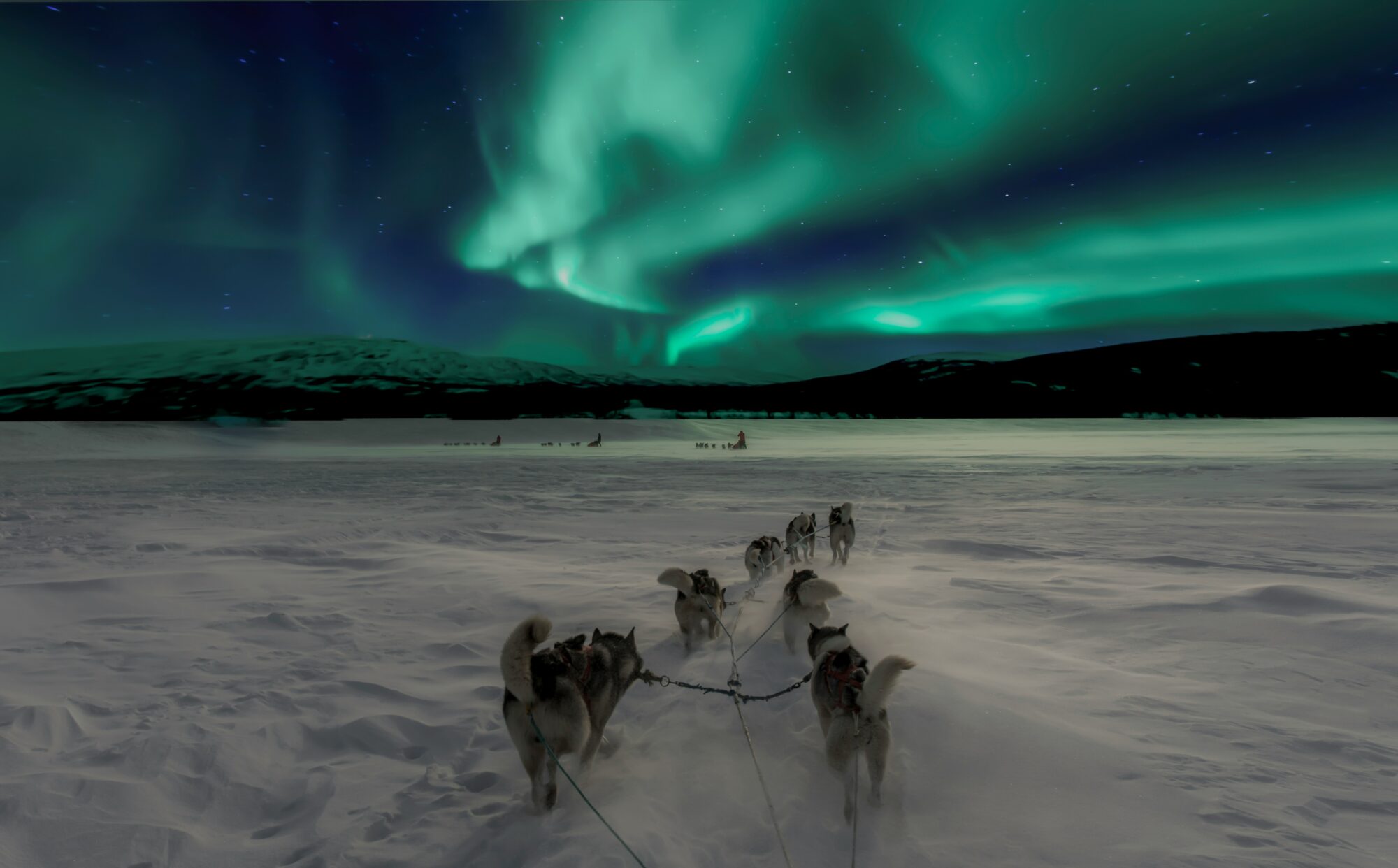
Why 2025-26 Is Peak Aurora Season
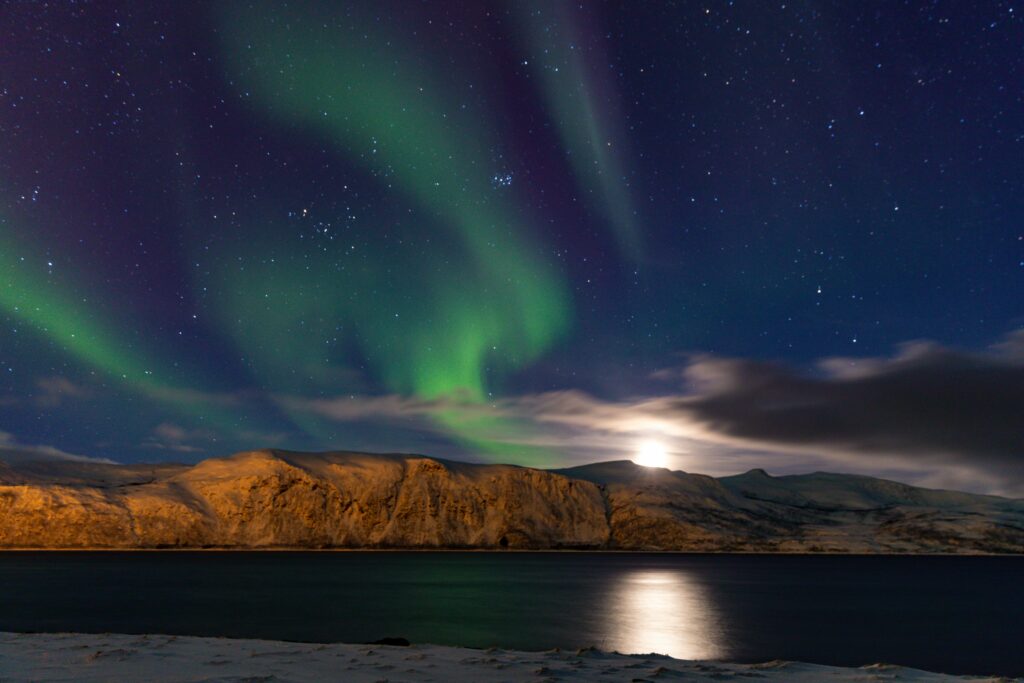
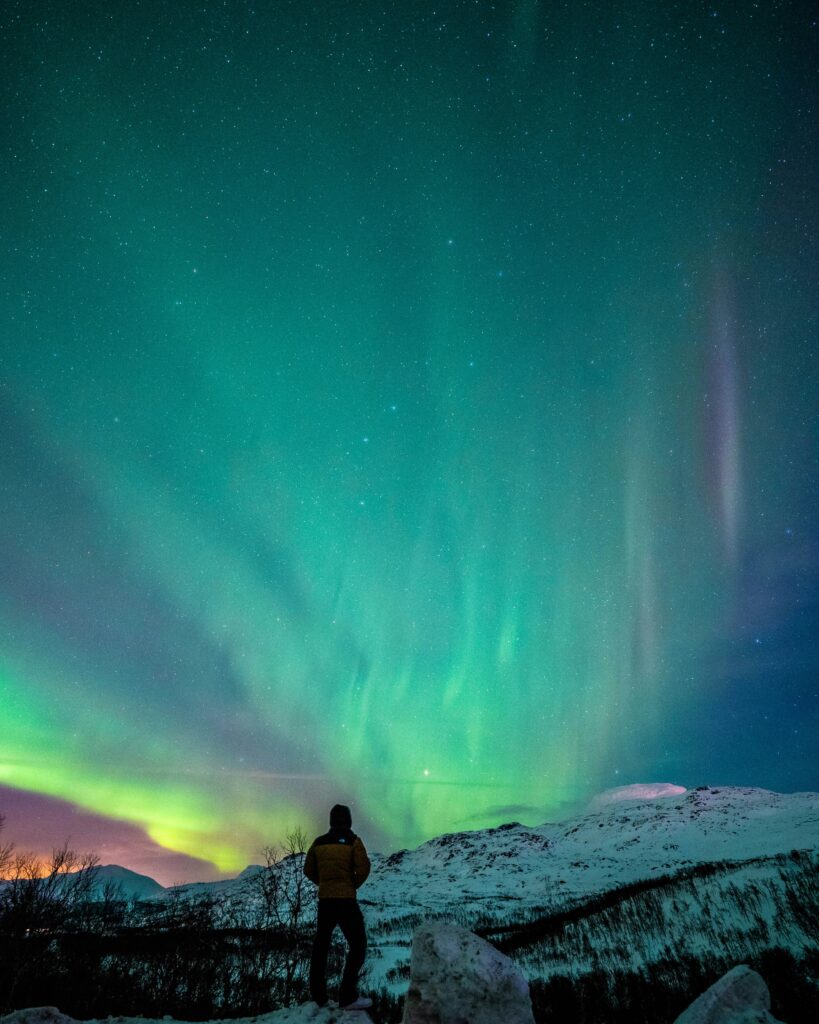
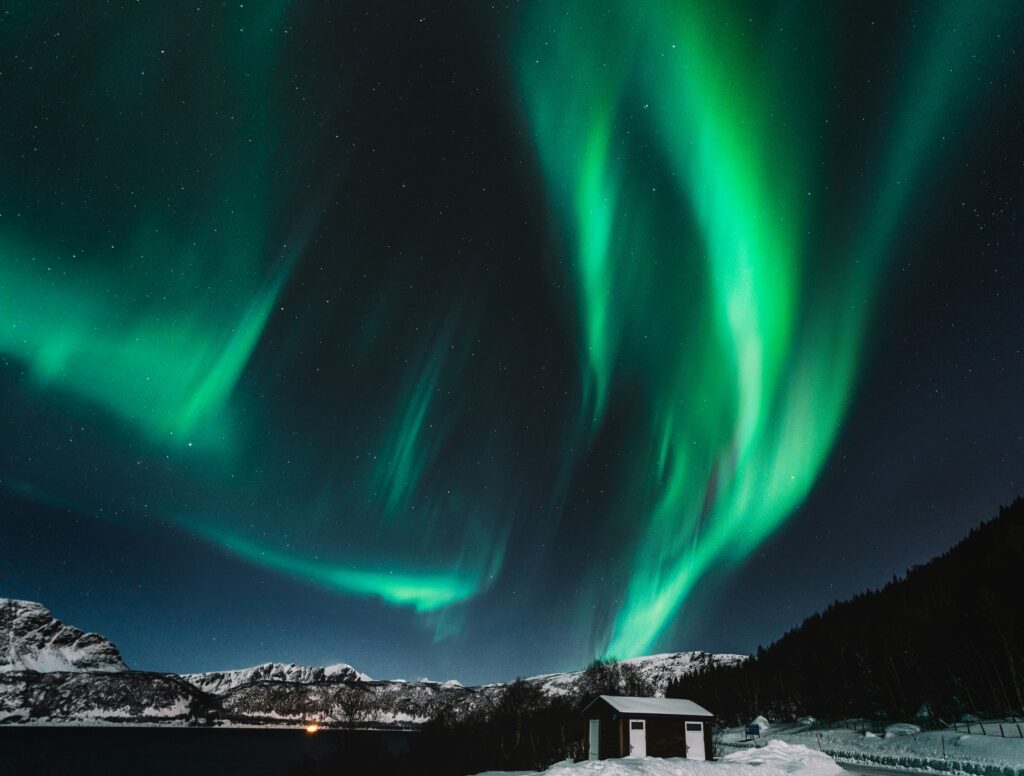
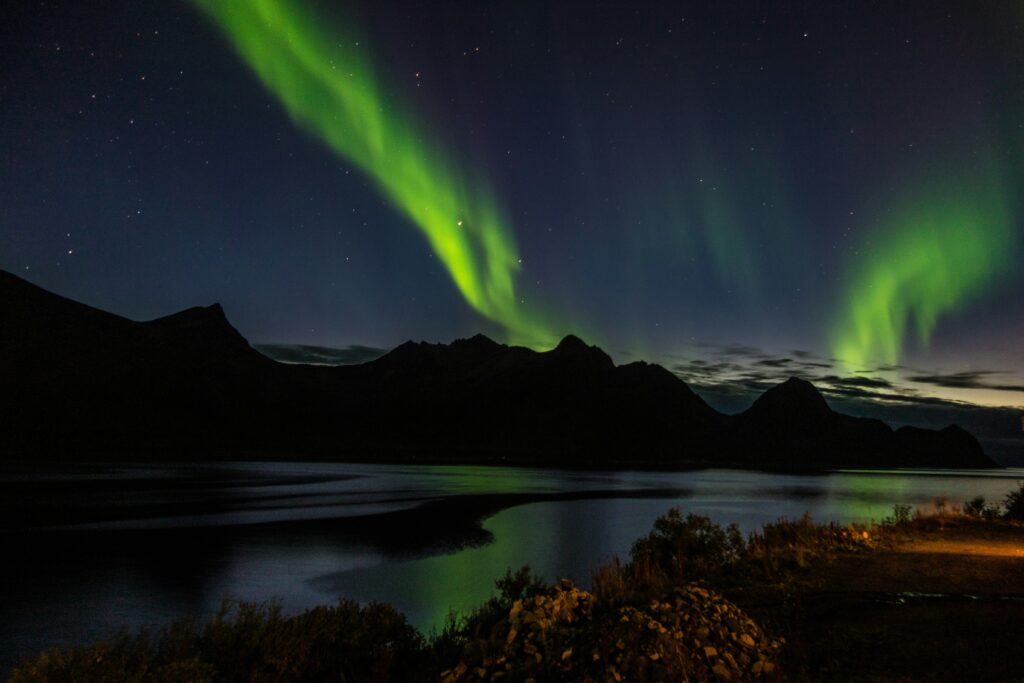
Solar Cycle 25 hit its official solar maximum in late 2024 and is forecast to stay near peak intensity through mid-2025, meaning the Sun is throwing off more flares and coronal-mass ejections than at any time in the past decade. More charged particles = more (and brighter) auroras—sometimes as far south as Trondheim or even Oslo during major storms.Time and Date
When to Go: Month-by-Month Cheat-Sheet
| Month | Darkness | Temps* | Pros | Cons |
|---|---|---|---|---|
| Sept – Oct | 12–14 h | 0 – 8 °C | Autumn colours, mild nights, high geomagnetic activity peak in equinox | Wetter; tours just ramping up |
| Nov – Dec | 17–20 h | –5 – –10 °C | Polar-night mood, Christmas markets, cheapest flights | Very cold, few daylight hours |
| Jan | 18–20 h | –6 – –12 °C | Deep-winter landscapes, ice hotels | Coldest month, potential storms |
| Feb – Mar | 14–16 h | –4 – 0 °C | Longer days for dog-sledding & skiing, statistically strong aurora activity | Popular = pricier |
| Apr | 12 h | 0 – 5 °C | Sunset + aurora in one night, spring ski touring | Season ending; some operators close |
*Average coastal temperatures north of the Arctic Circle.
Why Feb-Mar feel “visitor-friendly”: you still get long dark nights but enough daylight for snowmobile safaris or whale trips.Fifty Degrees North
Where to Base Yourself
| Spot | Latitude | Strengths | Getting There |
|---|---|---|---|
| Tromsø | 69° N | Biggest tour hub, nightlife, museums | Direct winter flights from London/Paris |
| Alta | 69° N | Dry inland climate = more clear nights | 2-hr flight from Oslo |
| Lyngen Alps | 69° N | Epic fjord + peak backdrop, ski touring | 2 h drive from Tromsø |
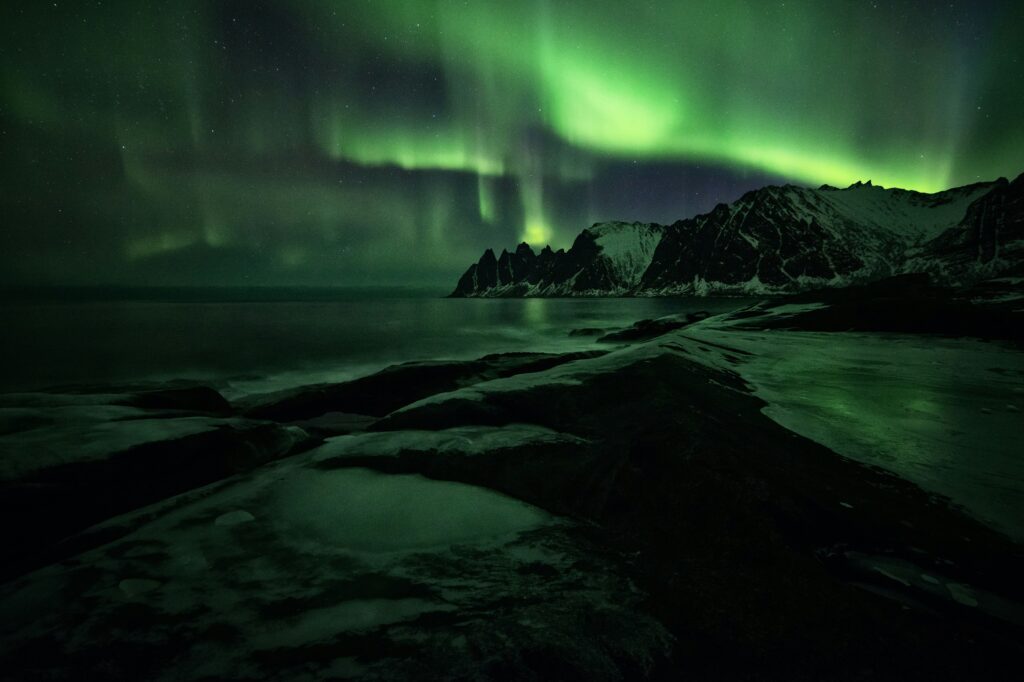
| Senja | 69° N | Low light-pollution, dramatic cliffs | Ferry or 1 h drive from Tromsø-Finnsnes |
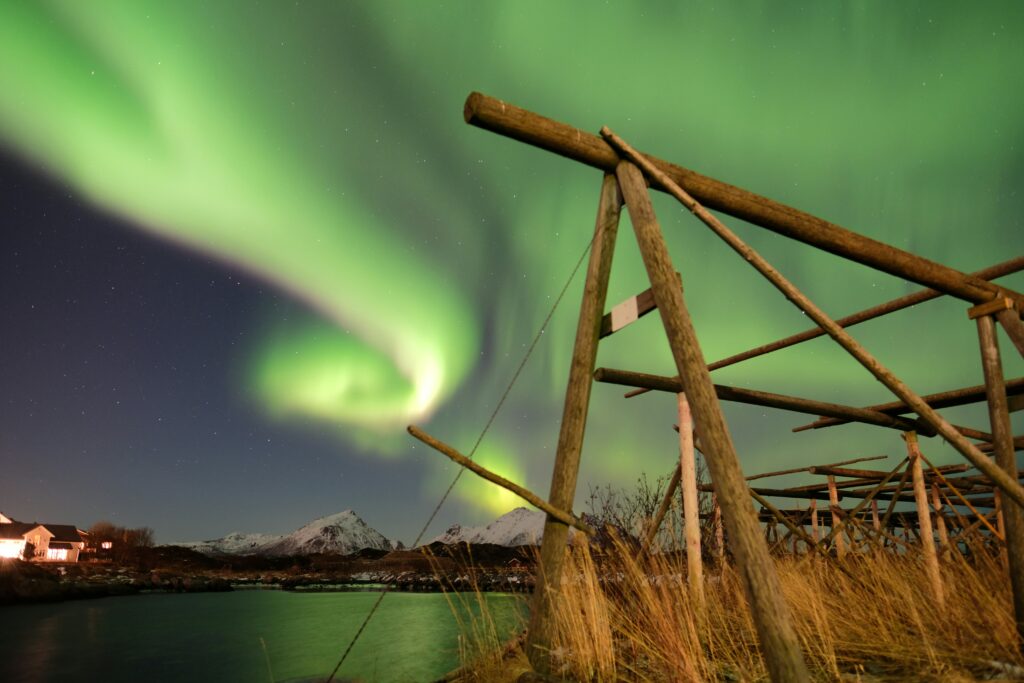
| Lofoten | 68° N | Iconic fishing villages, photo heaven | Bodø ferry or Evenes airport |
| Bodø / Salten | 67° N | Fewer crowds, 2024 culture capital buzz | Hourly flights from Oslo |
| Svalbard | 78° N | Polar-night from Nov-Feb, snowmobile safaris | SAS flight via Oslo/Tromsø |
Northern Norway locations from Tromsø to Bodø sit inside the auroral oval and regularly record KP 2-3 displays; Svalbard scores longer darkness but harsher weather.Visit Norway
How to Maximise Your Chances
- Stay ≥ 4 nights. Cloud cover is the real party-pooper; a multi-night window lets storms blow through.Fifty Degrees North
- Chase gaps, not KP. Use Yr.no for cloud layers and the free NorwayLights app for short-term forecasts.
- Go mobile. Join a “chase” tour by minibus or rent a car—being able to drive 100 km can turn a bust into a wow.
- Mind the Moon. The week around new moon (or when the moon is below the horizon during prime hours) gives darker skies.
- Pack smarter: insulated boots (rated –25 °C), windproof shell, tripod, spare camera batteries kept in inner pockets.
Aurora Photography Quick-Start
- Manual mode: ISO 800-3200, f/2.8-f/4, 4–15 s exposure.
- Focus: set to infinity in daylight; mark it with tape.
- Composition: include foreground—cabins, fjords, snow-covered pines—for scale.
- Time-lapses: shoot RAW every 5 s for 30-40 min, assemble later for a swirling sky video.
Beyond the Lights: Daytime Arctic Activities
| Experience | Where | Season |
|---|---|---|
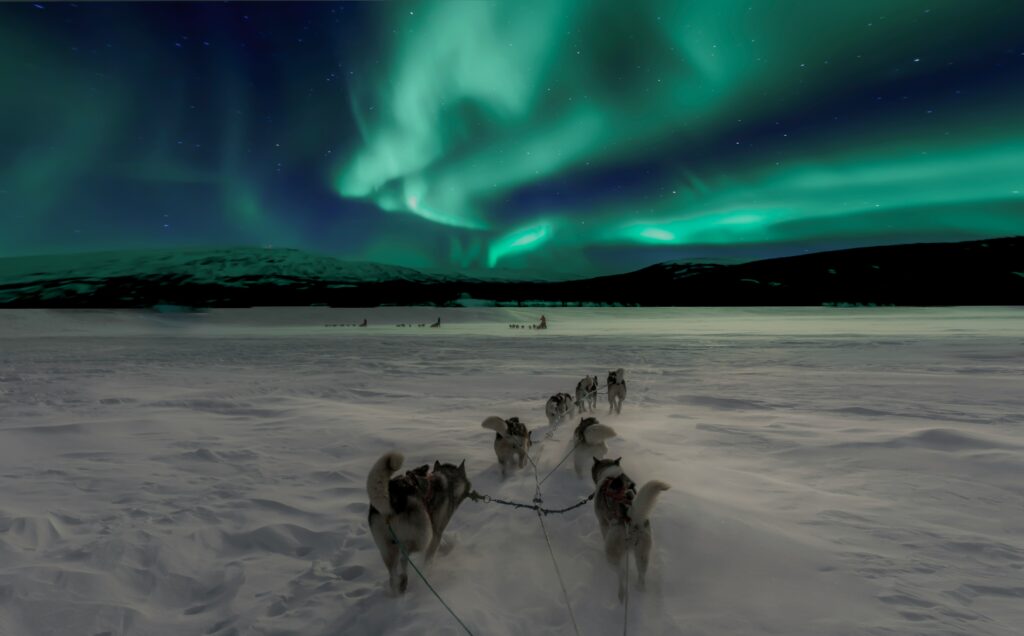
| Husky sledding | Alta, Lyngen, Tromsø | Nov – Apr |
| Sami reindeer encounter | Karasjok, Tromsø | Dec – Apr |
| Whale watching (orca/humpback) | Vesterålen, Tromsø | Nov – Jan |
| Ski touring under auroras | Lyngen Alps, Narvik | Feb – May |
| Snowshoe + campfire photography workshop | Senja, Lofoten | Oct – Mar |
Frequently Asked Questions
Do I need to book tours in advance?
Yes—solar-maximum hype is real. Reserve popular minibus chases and glass-igloo stays 3–6 months ahead.
Can I see the lights on a cruise?
Coastal voyages (Hurtigruten or Havila) offer wide, dark decks and cover a broad weather gradient—great odds if you have a week.
Are drones allowed?
They’re banned in most national parks and near airports; always check local regulations before flying.
Responsible Aurora Hunting
- Leave no trace; pack out all litter and avoid trampling fragile tundra.
- Never point bright headlamps at the sky during other photographers’ shots.
- Support Sámi-owned operators for authentic cultural insight.
Final Spark
With Solar Cycle 25 blazing, 2025-26 is the brightest window for aurora borealis in more than a decade. Plan a flexible itinerary north of the Arctic Circle, keep one eye on the weather radar, and let Norway’s dark winter skies surprise you with dances of green, pink, and violet—memories your camera (and soul) will replay for years. God tur, and clear skies!